
This spring, as Butterfield Trail Village prepares to celebrate its 40th anniversary, the community isn’t accepting the status quo. In anticipation of breaking ground on one of the Village’s most significant expansions — a major addition to the assisted living setting — BTV honors an extraordinary past while keeping a careful eye on future sustainability. Milestones deserve reflection, and two longstanding BTV residents offer uniquely rich perspectives: Rick Meyer, a resident of nearly 19 years, and June Colwell, who has called Butterfield home for 31 years. Though their paths to Butterfield were different, their stories intertwine to create a portrait of a place that has grown, adapted and thrived throughout its existence.
Arriving at Butterfield
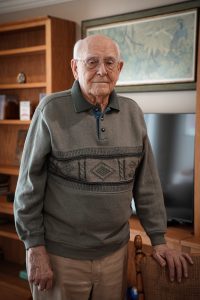
Rick Meyer’s connection to Butterfield began long before he moved in. “My parents were here eighteen months after it opened,” he recalls. Following a remarkable career spanning biological sciences, environmental research and university leadership, Rick and his wife, Mary, returned to Arkansas after years of living in Oregon and North Carolina. Already knowledgeable about the continuing care retirement community (CCRC) model, Butterfield felt like the right fit. The couple was intrigued to come to a place that was still growing, still taking shape. “We were excited to come from a mature gated community to a developing one,” he says. “We got to see and be part of the maturation.”
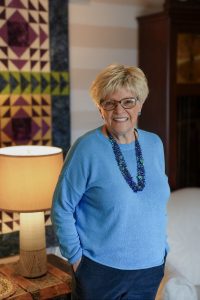
June Colwell arrived to live in the Village at just 59 — very young by Butterfield standards — after her older husband, Philip, recognized his diagnosis of Hodgkin’s disease would necessitate moving to a senior community that could support their eventual needs. Her mother-in-law had lived in the Village for a decade, and June had spent lots of time visiting and helping her move. “Butterfield wasn’t a shock to me,” she smiles. “It was just another step in my life.” Still, it felt strange at first. “I think the average age was about 83. They looked at me like, ‘Who is this youngster?’” But neighbors quickly welcomed her with warmth — muffins brought to the doorstep, friendly conversations — and she soon “fell in love with this place.”
First Impressions and Future Growth
Looking back, June vividly remembers an elegant Butterfield in the early ’90s. “The dining room was gorgeous,” she says. “Beautiful tables, potted trees… when you walked in, it felt like California.” She recalls a time when resources felt more limited, but residents took real pride in their surroundings. Rick’s first impression was different, shaped more by his planner’s eye. “At first, I thought the main building looked like a dated Holiday Inn,” he says, laughing. But he noticed small changes over time — lighting, new rugs, brighter colors — transforming not just the look of the space, but also enhancing the mood and social energy that buzzed within it. “People went from just sitting quietly to enjoying themselves so much we had to add sound panels!”
Over the decades, Rick and June have witnessed many stages of Butterfield’s physical evolution. Village Homes emerged where cows once grazed. New roads were paved, and utilities stretched to the far corners of the property. The Lodge took shape, and extended Healthcare and Special Care wings were created. The main building grew to include a grand portecochère, a spacious new common area, the Bistro and a state-of-the-art performance hall.
Rick served on the board of directors during key expansions of the Healthcare Center, helping guide the shift from the old Alzheimer’s Wing to a broader Special Care model. Met with initial concerns that Alzheimer’s patients would be left behind with the changes, he and others worked to explain that the new direction would be an improvement. “It wasn’t abandoning anyone,” he says. “It was an expansion.” Relief followed resident uncertainty as education helped show how much more inclusive and supportive the updated approach would be.
June recalls that the eventual expansion of the healthcare space was very personal for her. When her mother-in-law’s health eventually required full-time nursing care, there weren’t enough beds available at Butterfield. She had to be temporarily placed off campus in another facility until space opened up at the Village. “We can’t have that happen again,” she says. “We needed to grow.”
Life at Butterfield: The Joy of Programs and People
If buildings showcase Butterfield’s growth, programs reveal its spirit. June’s memories fondly trace that evolution. “When I came, there weren’t big budgets, so we made our own fun.” She became the unofficial ukulele player for horse-drawn hayrides, leading residents in singing old favorites as they rode around the loop perched on hay bales. She and a neighbor organized lobby sing-alongs, and a Greek resident taught a few ladies the Sirtaki, a traditional line dance – resulting in a high-spirited group winding through the dining room in blue and white costumes. June’s deep friendship with Director of Programs and Events Riki Stamps spans many years. “She turned this program around,” June says. “I don’t know what we’d have done without her.” June has always embraced Butterfield’s vibrant social offerings, cheering Riki on as she has ushered in everything from themed evenings to international travel programs. “We went from hayrides to plane rides,” June laughs.
Rick helped elevate Butterfield’s cultural offerings from another angle – quite literally, center stage. His wife, Mary, was a skilled concert pianist with a great understanding of what a top-notch piano’s voice should sound like. Rick joined a small group to help select the performance hall’s grand piano, now used by outstanding guest artists. He also recognized the importance of having an acoustical engineer directly involved as the performance hall was built, resulting in the impressive sound quality that makes the space so exceptional today. “World-class musicians are always surprised by what they find here,” he notes.
A Commitment to Care
Healthcare and its evolution over the years, both residents emphasize, is central to Butterfield’s identity. Rick describes the arrival of the University of Arkansas Medical Sciences (UAMS) Internal Medicine Clinic at BTV as “transformational.” He says, “Residents no longer have to wait weeks for outside appointments. They get help when they need it. The continuity of care is remarkable.”
June’s view of healthcare is directly shaped through the lens of lived experience. As her husband Philip’s health declined and the challenges of care became overwhelming, it became necessary for him to transition to the Health Care Center. The relief of knowing her husband could receive the support he needed just steps away from their cottage was enormous. “It was a comfort to know he was close,” she says. Her understanding of the essential nature of a full continuum of care is the basis of her belief that Butterfield’s future expansion of the assisted living environment is so important.
 Why Butterfield Thrives
For both, the answer is simple: Butterfield grows with intention. It adapts without losing its heart. Word of mouth and reputation remain all-powerful. Staff commitment and skills matter. And while physical spaces are important, the residents themselves are who shape the culture. “The people who live here keep us strong,” June says. “It’s just comforting to know you’re here for life.” Rick adds, “Discovery and change are part of the excitement of life.” In his view, Butterfield’s resilience comes from its willingness to innovate – whether in healthcare, programs or strategizing what will meet the needs of future retirees.
Rick believes technology will define Butterfield’s next chapter, impacting everything from transportation to communication to healthcare. “We live in a dynamic world,” he says. “You’re behind the moment you stop moving forward.” June, now 90, offers a simpler wish: “I just hope it keeps thriving like it is. I can’t imagine wanting anything more.”
Rick and June’s stories — one analytical, one heartfelt — reflect the arc of the Village’s history. Through four decades of change, it has steadfastly remained what both residents cherish most: a place where people feel connected, supported and at home. And, if the past is any indication, Butterfield’s future is bright – grown from modest roots into a thriving, forward-thinking place without ever losing the warmth, humor and humanity that define it. Their observations illuminate a simple truth: Butterfield thrives because its people do.


